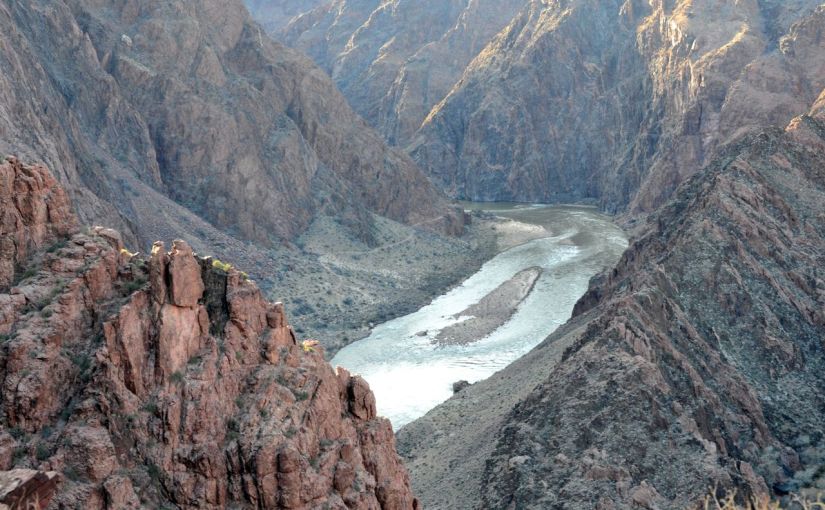
Grand Canyon is home to the Hopi, Navajo, Hualapai, and Havasupai. They all have Canyon creation myths. Three claim to have witnessed its birth. Only the Hopi admit they didn’t. But the Anasazi were here centuries before any of them. They were the original masters of the Canyon multi-verse. The Anasazi vanished mysteriously and no one knows why. All that remains are abandoned architectural wonders and lots of questions. Most scholars today blame climate change bringing drier cooler Summers and wetter warmer Winters beginning in 1190, lasting 300 hundred years. The people simply migrated-away seeking better conditions. But they left their spiritual imprint behind and there are times when you can hear them.
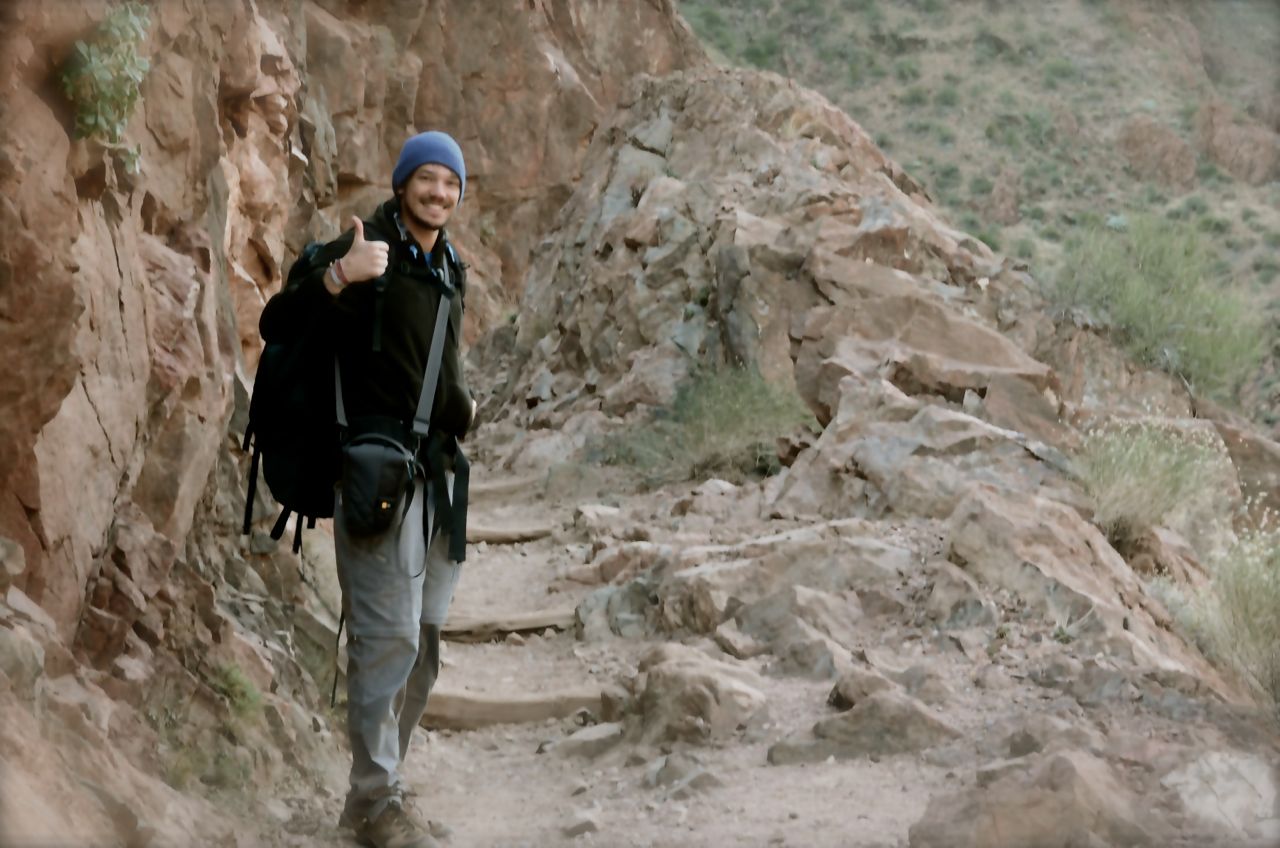
It was bitter cold the morning we began our descent to Phantom Ranch. The Canyon was nearly deserted. But we met a couple interesting spirits. At least I think we did.
Riding back from Phantom Ranch in the morning with a knowing smile Day Two on the Bright Angel: Loren found us on the Kaibab Trail, Day One and offered to help … we refused gamely but we needed help and he knew it … he circled-back for the next two days checking on us … a great spirit from Luxembourg
Grand Canyon mysteries are preserved in creation stories, lyric, and music. Jimi Hendrix was part Cherokee and became inspired by the ancient tales. His song, If 6 Was 9 came from a Hopi creation myth. The lyric, “if the mountains fall to the sea,” is the translation of the Indian word “Kaibab.” It’s also the name of the treacherous trail of descent to Phantom Ranch where we spent the night.
Like the Anasazi, Hendrix left a mysterious body of work that people are still trying to figure out.
The Tao of tomorrow is not knowing what it brings…
Stairs like these take you up to the next street level in America’s most vertical city
Jerome, Arizona has a complicated past. Each tomorrow brought a random incarnation. And it ain’t over yet.
Depending on where your head is at, Jerome is either a Historic Copper Mining town, the Largest Ghost Town in America, a Hippie-Squatter commune, an Outlaw Biker Hideout, a Destination Wedding, or a gentrifying community of artists, fine dining, and indescribable noire. But no matter what, it’s “America’s most vertical city.” After our harrowing experience in Grand Canyon, verticality was the exact opposite of what we had in mind, yet here we are. Planning ahead as always.
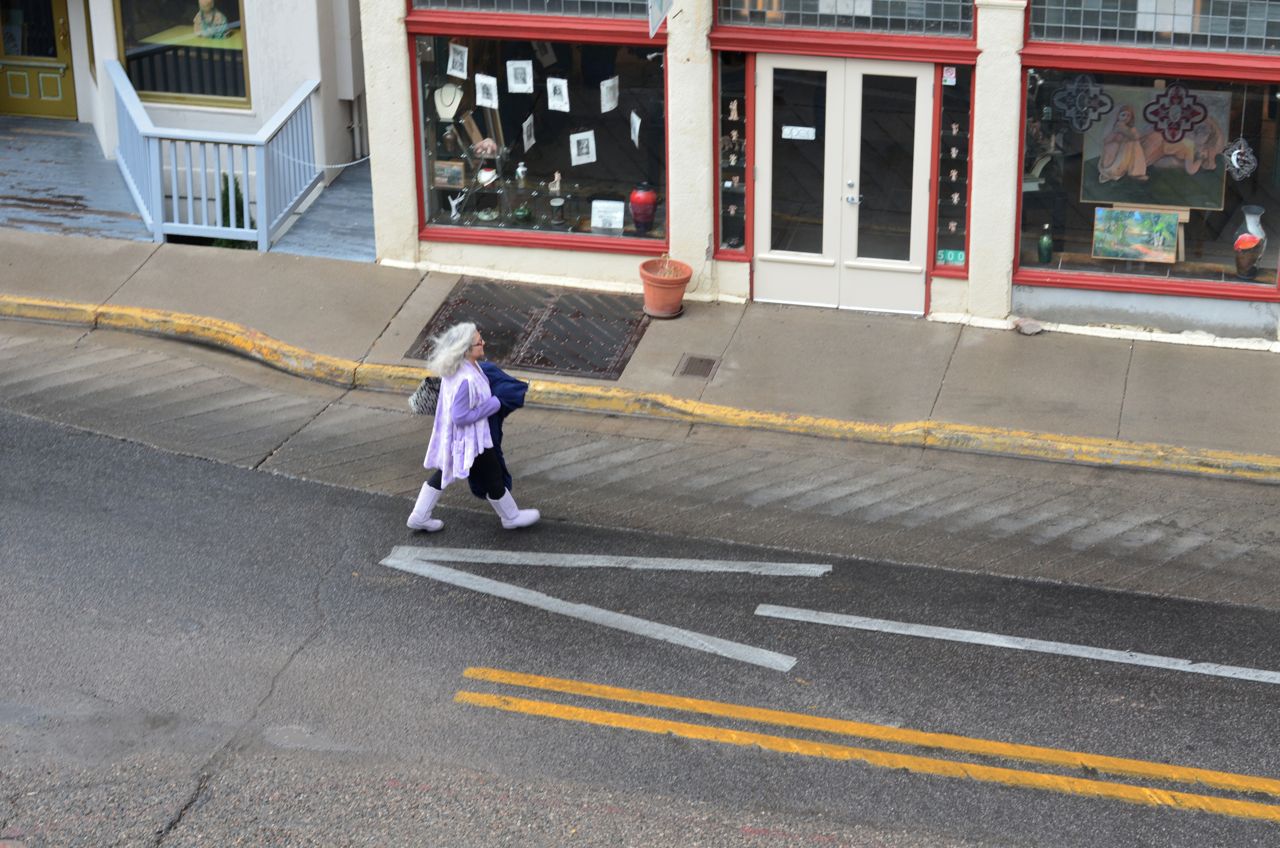
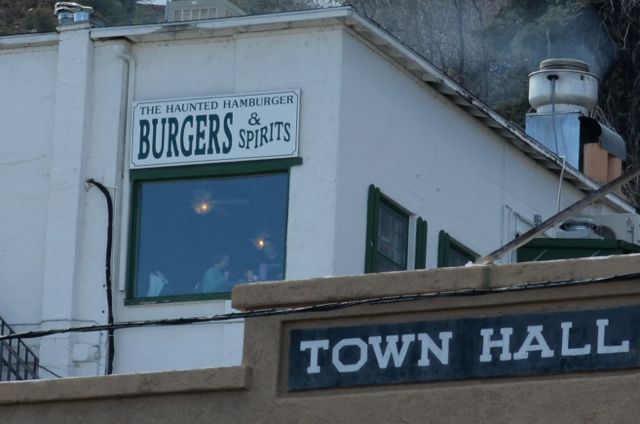
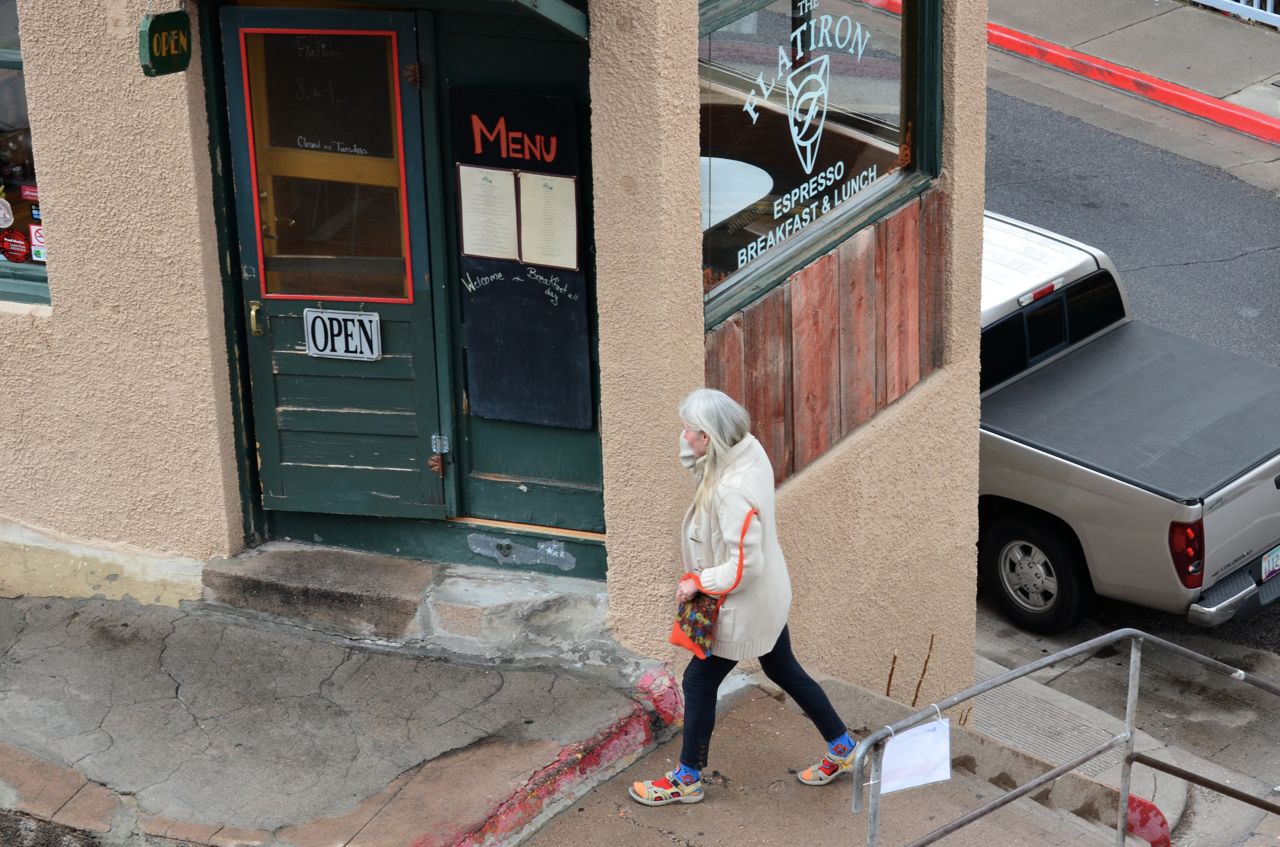
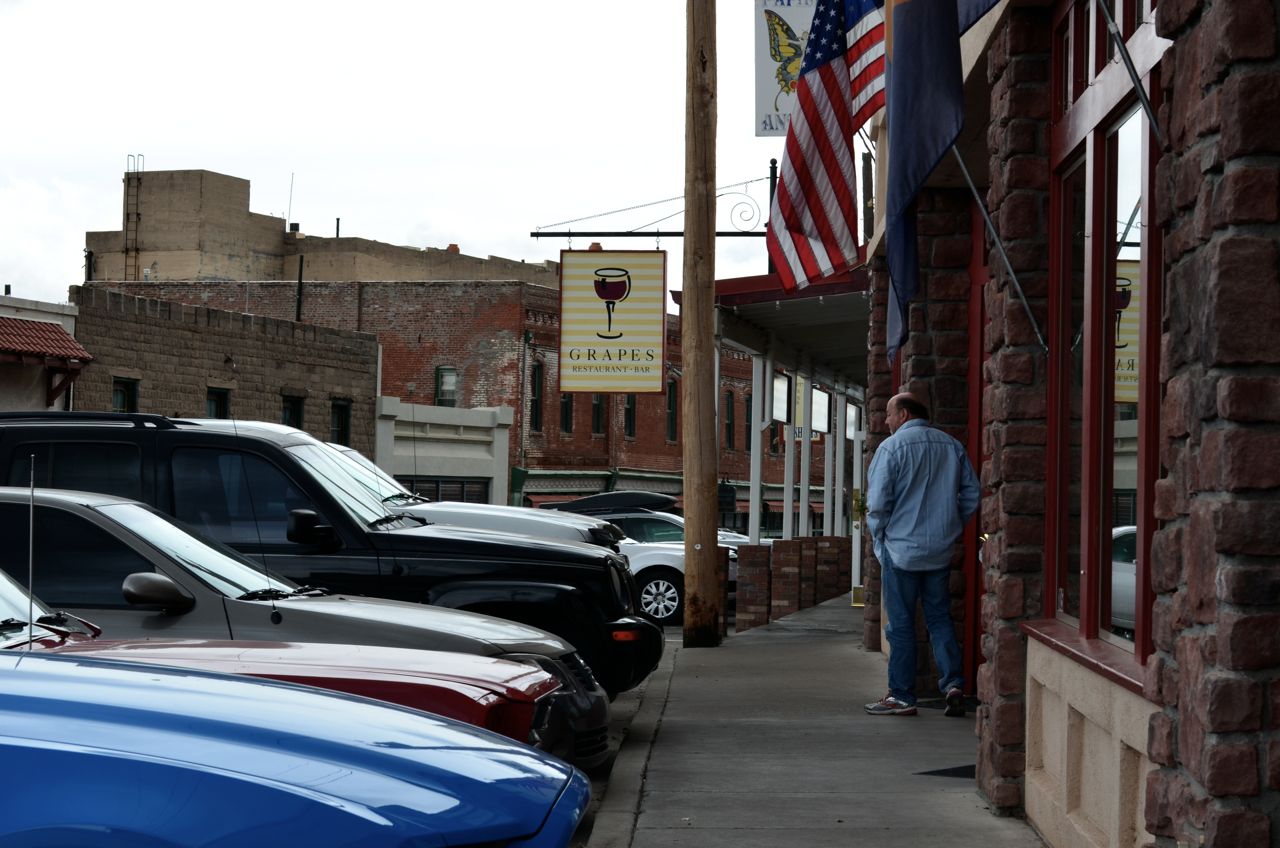
Local artist on her way to the Artist Co-op…artists used to set-up shop down in Cottonwood or Sedona but you can feel that Jerome is the next big thingJerome may always have a ghost-town motif…they wear it well hereYup, even the burgers are haunted…the food in Jerome is good, not at all what you expect from a ghost town and better than the tourista comida down in SedonaEvery great town has a Flat Iron building…this one is still searching for success in Jerome’s escalating foodie culture though it has a loyal clientele of seasoned localsThe only level section of street in Jerome…buildings at peak age for gentrification…Jerome has been discovered…a place to enjoy before it becomes what it’s destined to beLike every mining town, Jerome had a checkered past with colorful characters
When a cool spot becomes hot, people cast-about for its persona. Miners? Ghosts? Artists? Ladies of the night?! Everyone is trying something on in Jerome. It’s an open source free-for-all. There’s even a gallery called “Winery.” Wineries are indeed springing up around Jerome so the name isn’t totally absurd. In the meantime, it’s interesting watching people use the past to capitalize on tomorrow.
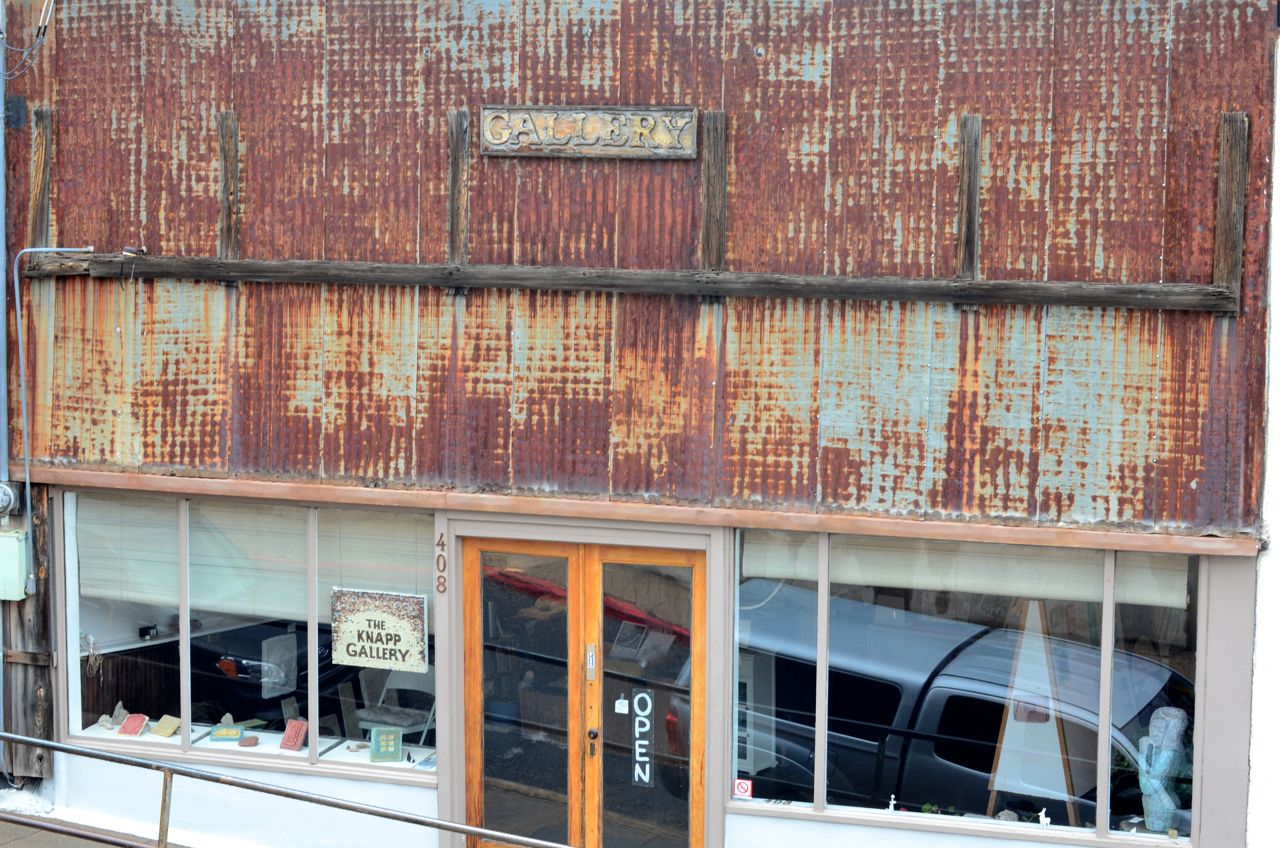
Specializing in local fine art with a glass of wine to wash it down
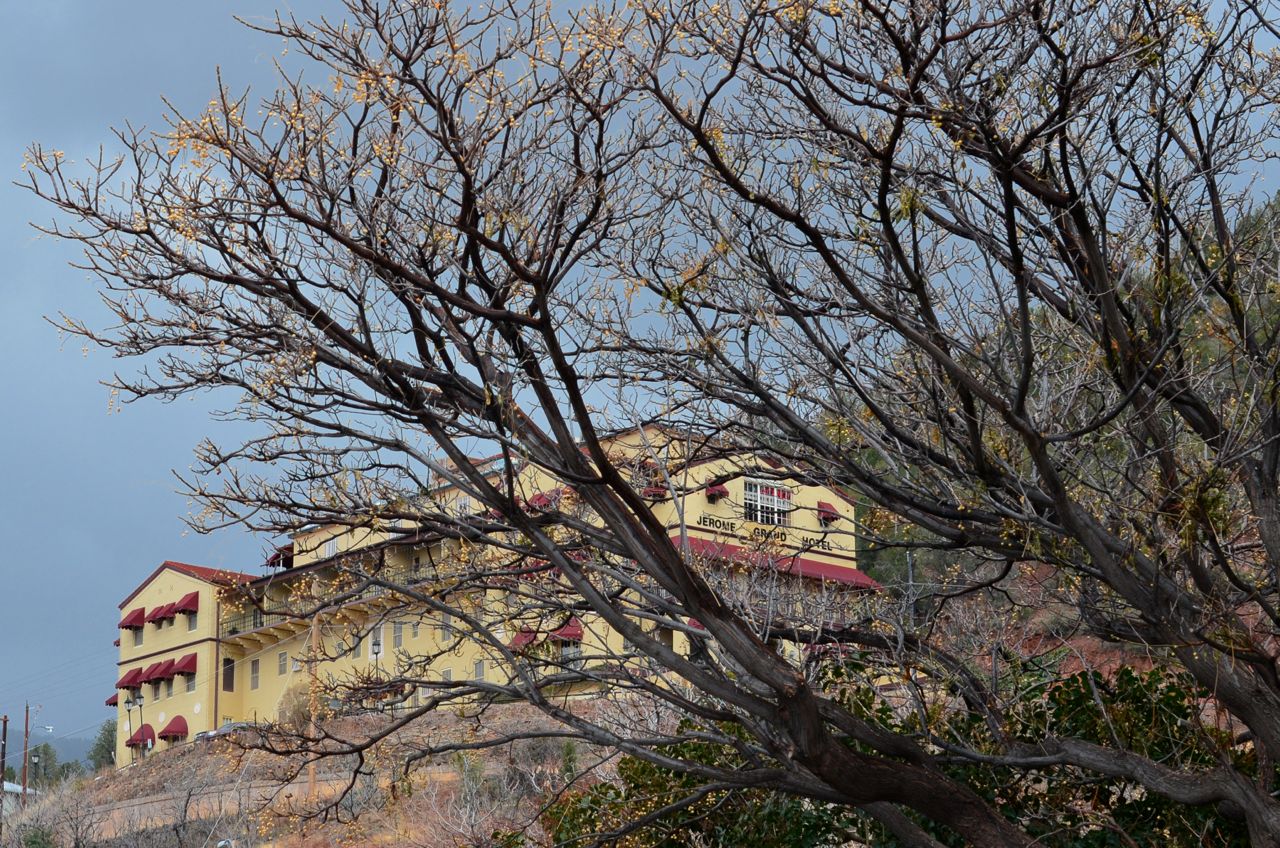
We rolled up to Jerome right after our adventure hiking to Phantom Ranch in The Grand Canyon. Accommodations were foremost on our minds after the tortuous trudge around endless switchbacks through a billion year old time tunnel made of solid rock. But to our horror, Jerome greeted us with a treacherous cluster of sharp switchbacks guarding the highest point in the most vertical city in America where rooms awaited us atop the Grand Hotel, formerly known as a sanitarium, currently housing a restaurant-bar called, “The Asylum.”
If Vlad The Impaler wanted to plan a diabolical end to our adventure he couldn’t have topped this. Strangely enough, the Grand Hotel bears a faint resemblance to Vlad The Lad’s infamous fortress. This was going to be…interesting.
The Grand Hotel…a great hotel, great restaurant, great bar in historic-mining-town motif
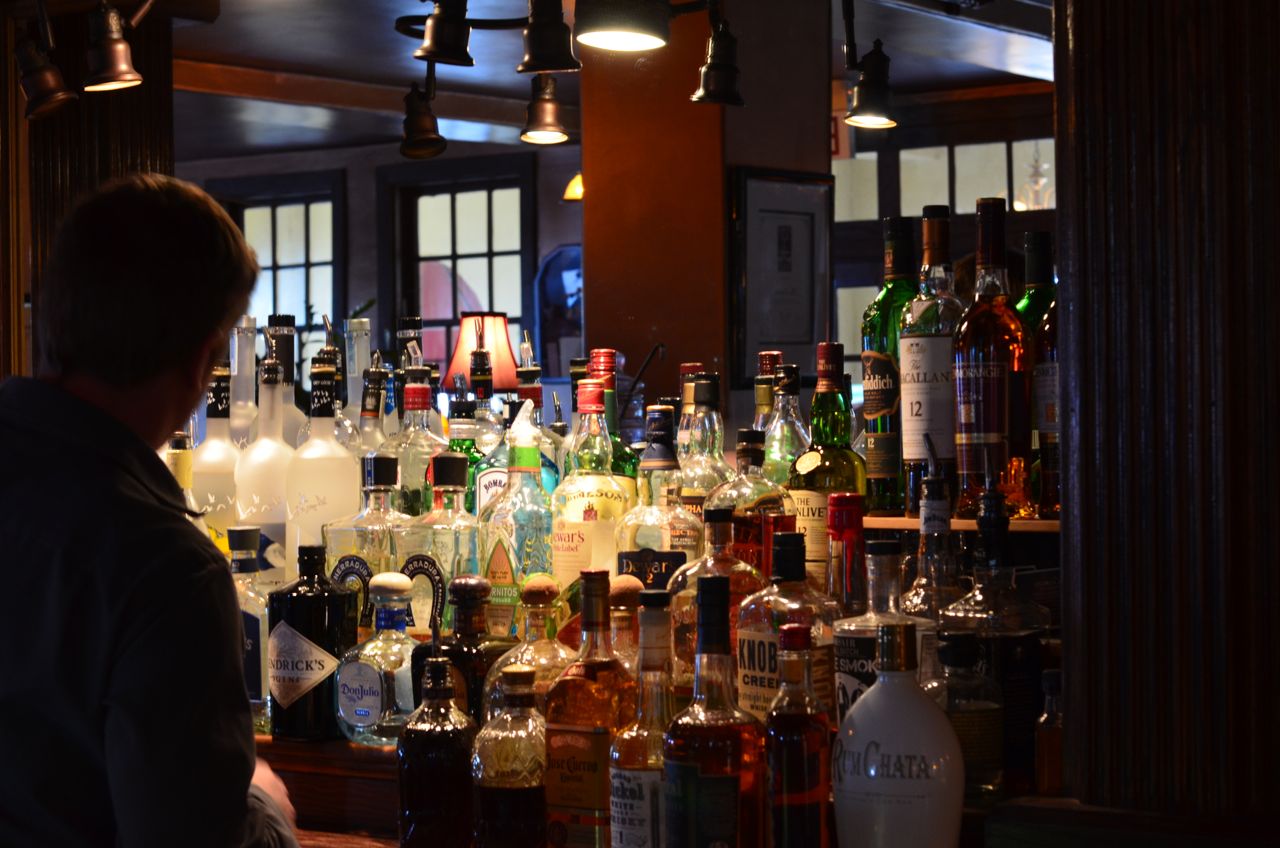
Jerome, The Grand, The Asylum, and the first self-serve elevator West of the Mississippi had plans for us which made our 3-days in Jerome magical…although we could be seen most often in The Asylum. This place felt like home and we needed home after our terrible brushes with death in Grand Canyon. We were lucky to be alive and we drank to that con mucho gusto.
The Asylum was a perfect place to relax and reflect on the strange journey of the past weekThe restaurant at the Grand Hotel serves noire with fine-dining…no need to go out for dinner
For breakfast and lunch you need to venture down to the town-level which involves switchbacks…of course. But it’s well-worth it. There’s a huge foodie scene just taking-off in town and it’s fun trying all the different spots. There’s great local art and pottery at several shops along with dozens of old dilapidated architectural wonders to explore. And like art communities everywhere people can get creative.
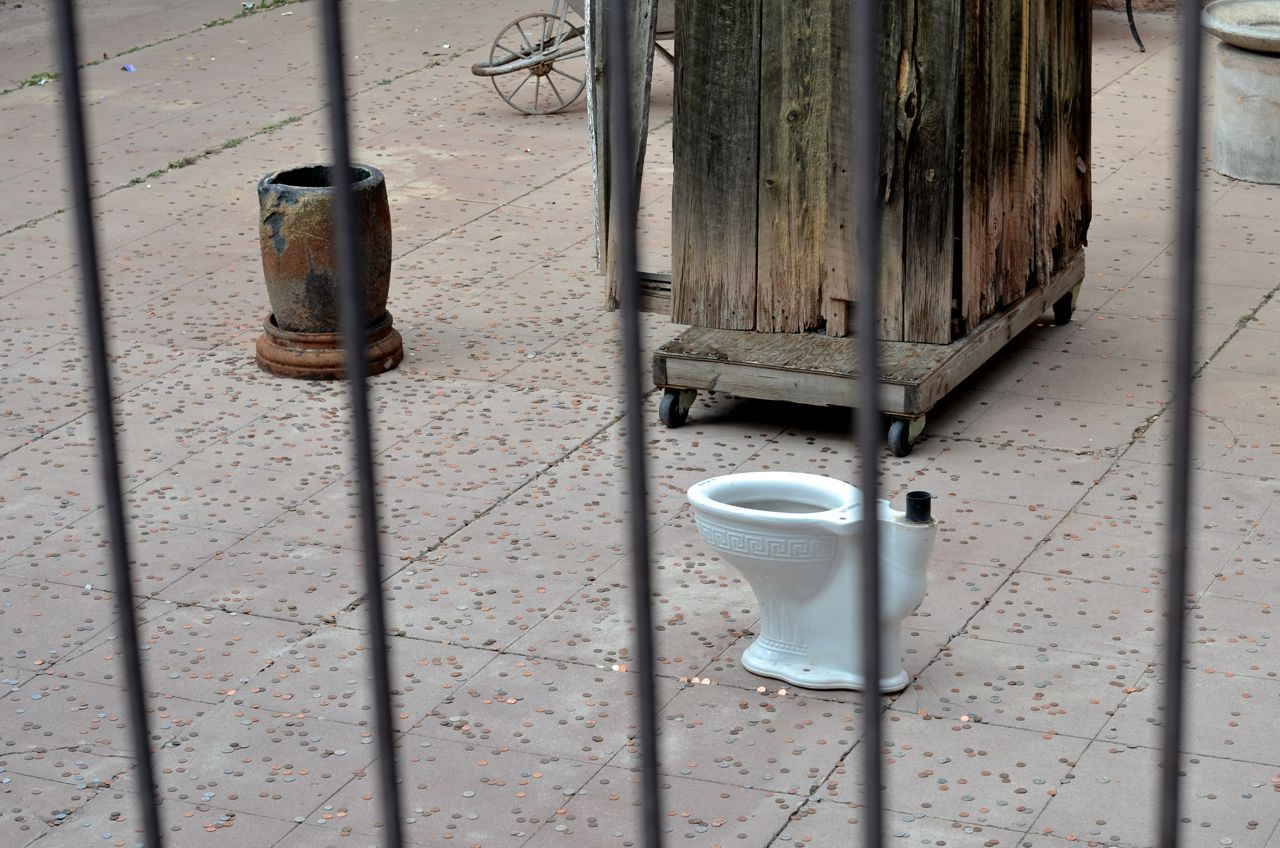
Few have succeeded where many have failed…obsession is always costly
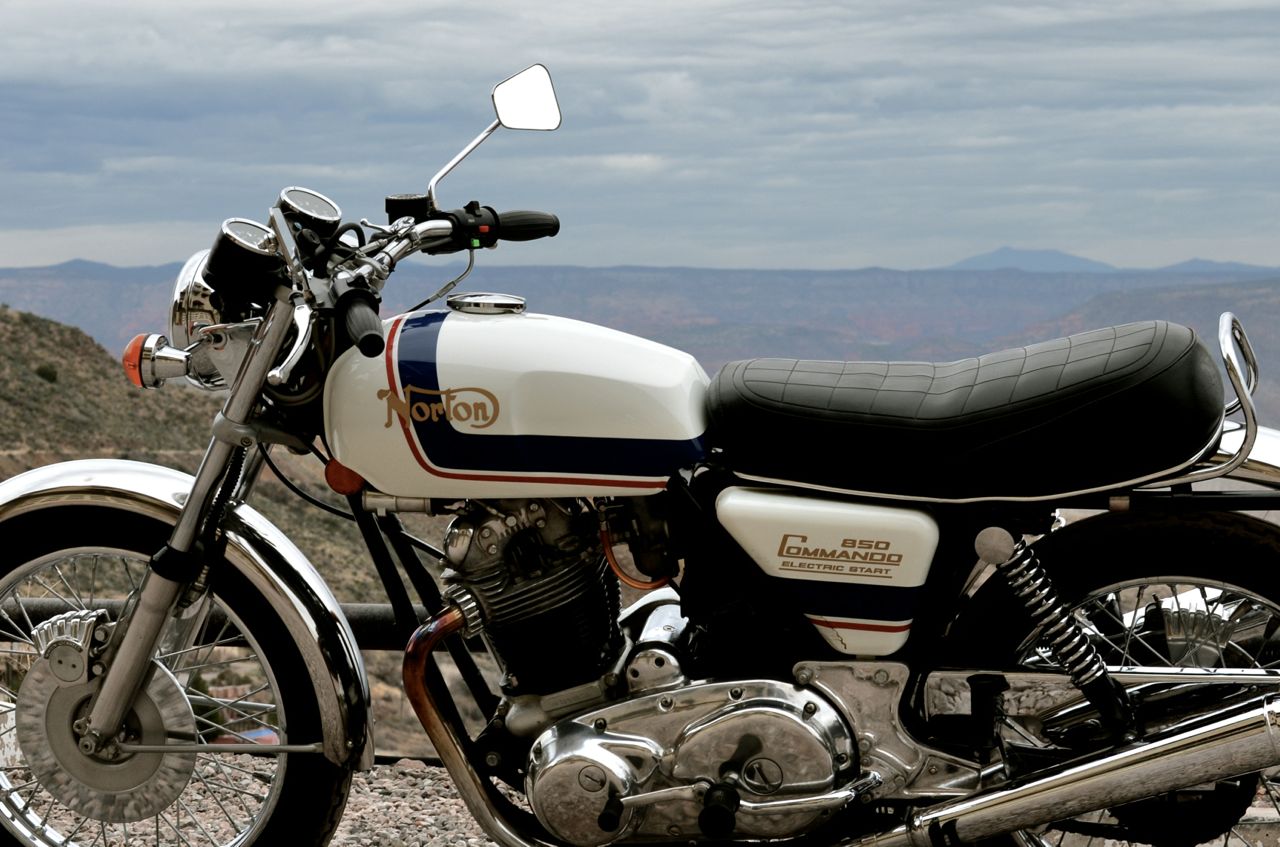
Our last night in The Asylum Bar and Restaurant treated us to a large and in-charge Brit dressed hilariously in ill-fitting riding clothes accompanied by a small entourage of joviality. The man was fall-down funny and we couldn’t help wondering what bike he rolled-in on as we looked across our sedate dinner to the elbow-crashing feast of friends, wine, and food at his table. What a treat. In the morning we snuck outside early to get a view of the only bike a Brit should be allowed to ride—a Norton. The site of Her Majesty’s Largeness racing away that cold morning on his small scoot, wife clinging for dear life made us laugh so hard we couldn’t get the shot. It was theater on two wheels.
Norton 850 Commando – a work of art. The Brit from California and his wife…? True grit
Jerome is not a place you come across on your way to somewhere. It’s hidden in a verticality above Cottonwood which is above Sedona. You have to know about it and now you do. You should go. But one day is not enough. 2-3 is about right. Stay at the Grand Hotel, hang out at The Asylum and recover your mojo. But remember this—Jerome doesn’t know what tomorrow will bring and neither do you. And that’s probably a good thing.
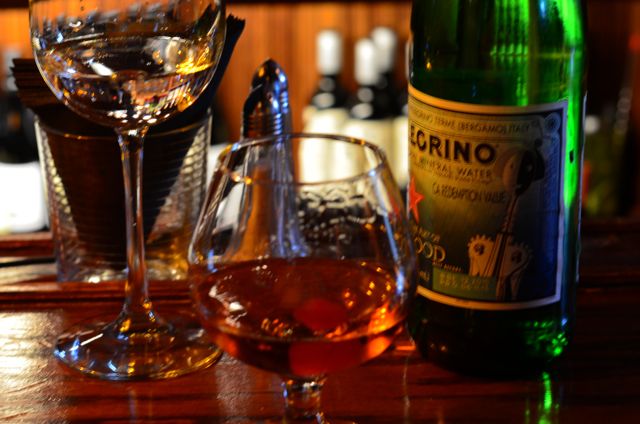
The Manhattan – after 3 tries the bartender became passable with this classic cocktail
Jerome, Arizona – January 30th – February 1st 2014
Sculptors conceive, architects see, but nature has the final say …
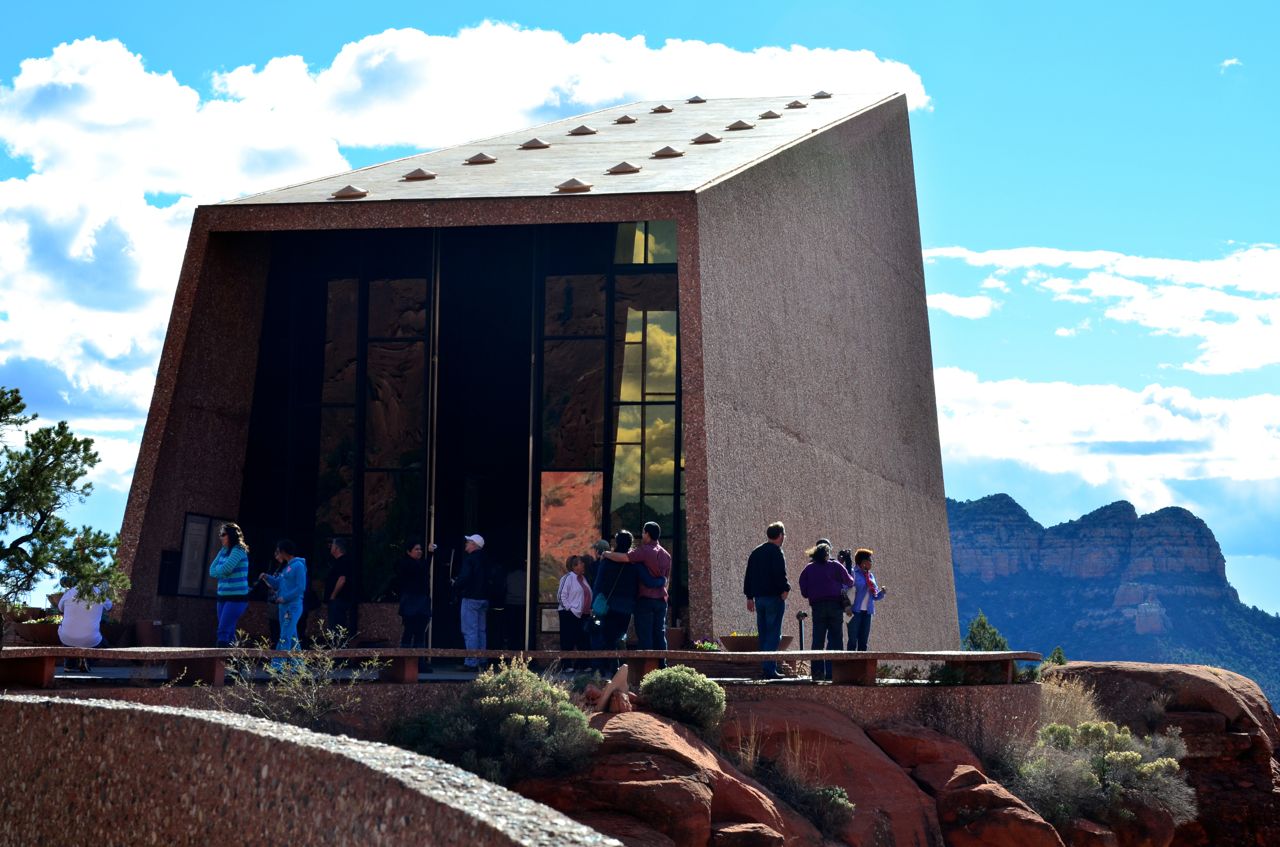
In 1932, Marguerite Brunswig Staude, an Arizona rancher and sculptor saw the just-completed Empire State Building and had a vision for a church. Her first attempt to build it was in Europe where Frank Lloyd Wright would handle the project. WWII ended her project before it began but in 1956, she brought her vision home to Sedona…24 years after original conception. A San Francisco firm that made its mark designing filling stations after the War was hired for the project (a leap of faith?).
In 1957, the Chapel Of The Holy Cross, a masterpiece of mid-century modern was completed. Forty years later Arizonans designated it one of “Seven Man-Made Wonders Of Arizona” (behind every man-made wonder is a woman). One day the Chapel found itself in the arms of the Catholic Diocese of Phoenix and the St John Vianney Parish in Sedona. There’s no daily or Sunday mass, nevertheless people are always in attendance.
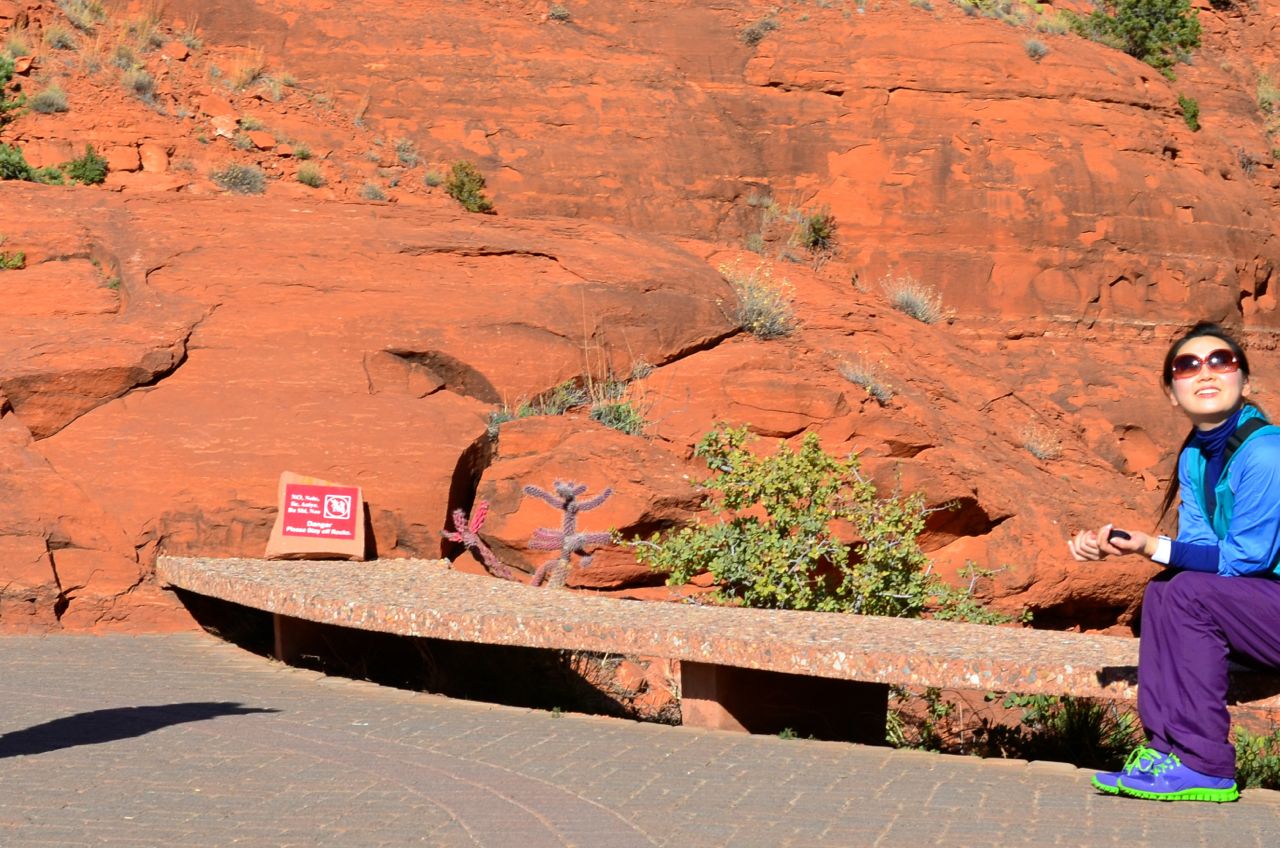
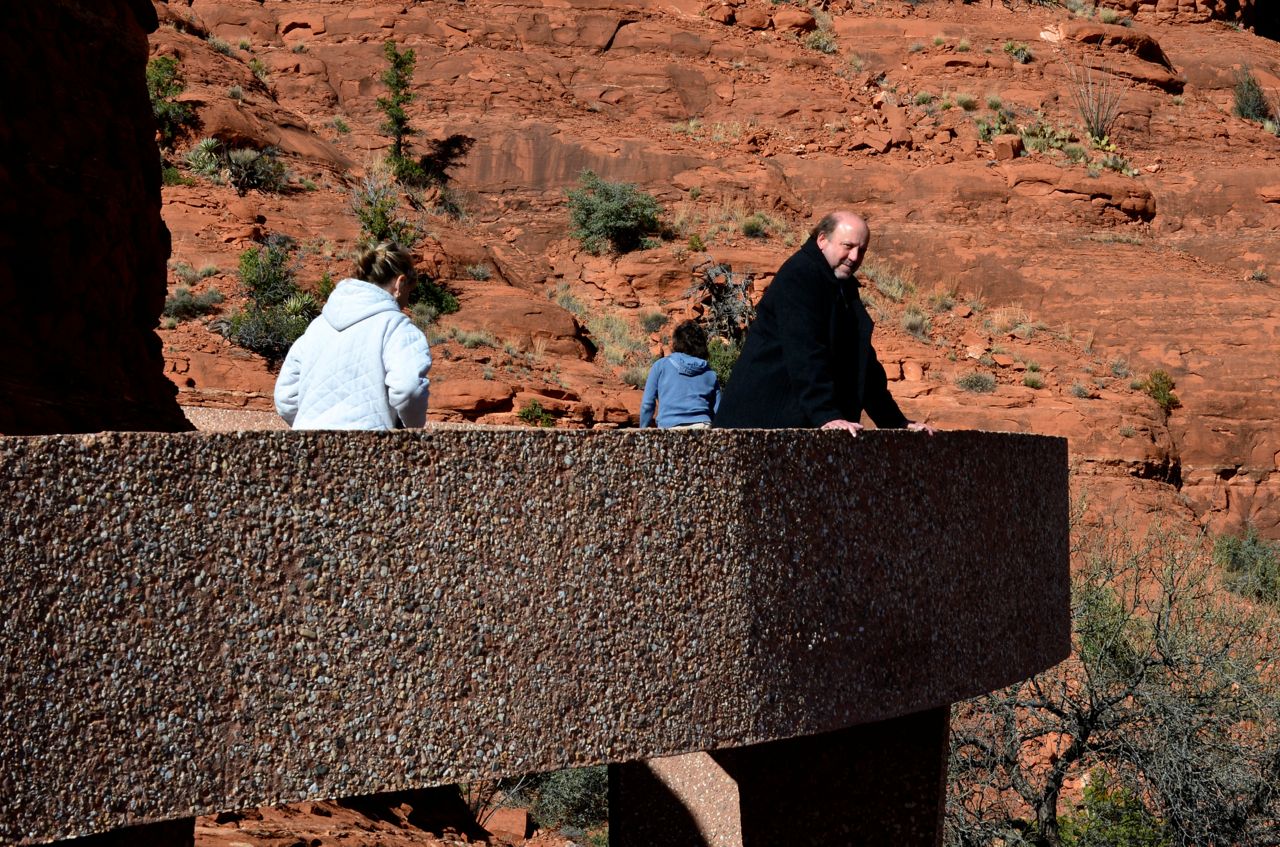
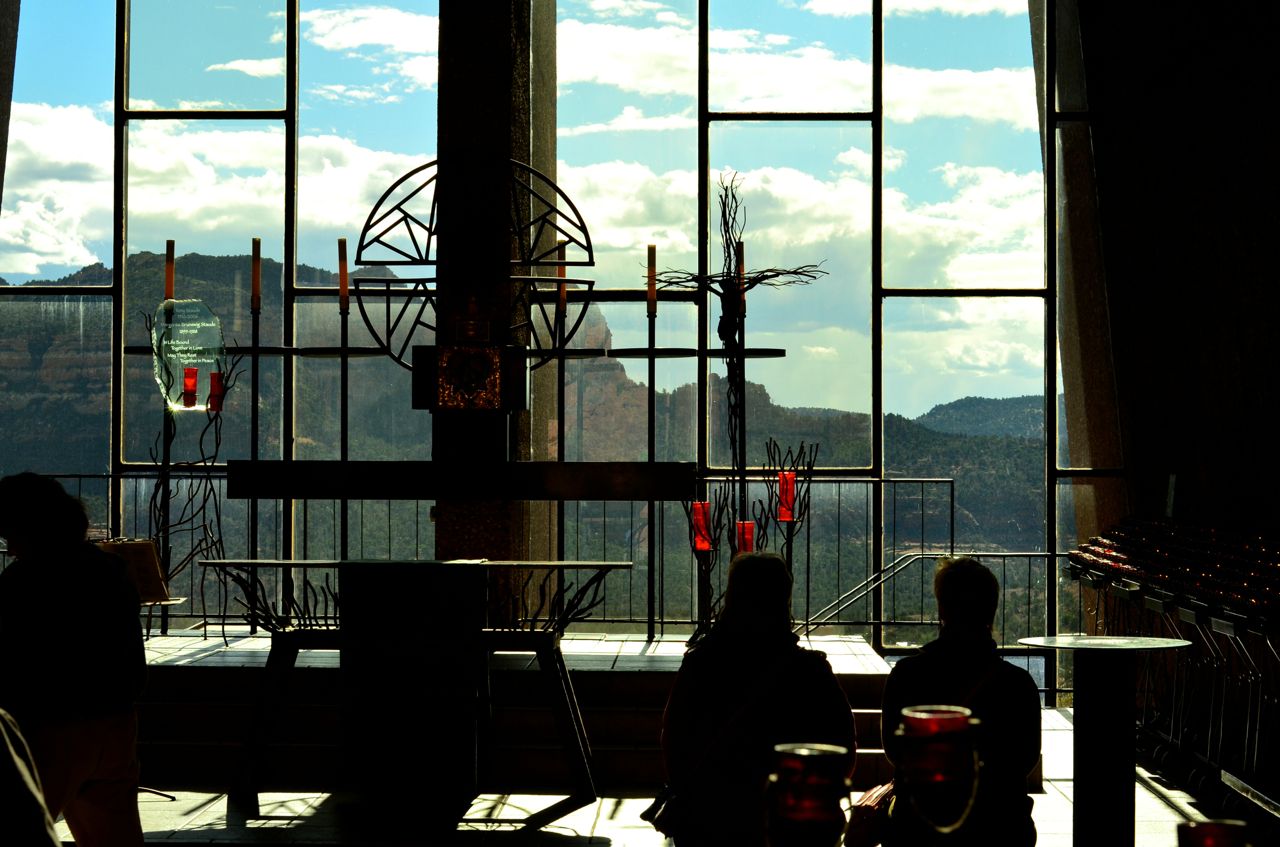
The built environment emerges intentionally from the natural environmentLike everything else the plaza and its bench are spawned from natural rock…Wherever you stand there’s a feeling of being suspended… The altar itself seems to be suspended… The architecture echoes the Mesopotamian Ziggurat – “the platform between Heaven and Earth”
An art-deco building rose from Manhattan bedrock, a sculptor conceived a church, an architect saw a Ziggurat, and Nature said “let there be flowers on this desert rock.” Upon reflection there’s no accounting for any of it.
You can never predict the outcome of original conception.
Sedona Arizona, February 1st 2014, two days after hiking Grand Canyon
Notes: I would never have known about this masterpiece were it not for my friend Jeff’s boneheaded idea for us to hike to the bottom of Grand Canyon, camp in 17 degree weather at Phantom Ranch then hobble back up to the South Rim in the most dire of straits with an ice-storm behind us in hot pursuit…we were very very very lucky to have made it back at all much less before the storm hit
Jeff knew about this Chapel and had actually been here before…somehow he must have known how much I love architecture and great design
It was such a fine extraordinary experience…and completely safe–unlike our hike in the Canyon
With this little detour in Sedona, Jeff almost made-up for nearly getting us killed in the Canyon…almost








 Steel Wheels